
The South Africa-UK PACT team convened implementing partners during their national Learning Event on 28 January 2026, in Pretoria, to discuss the centrality of integrating gender equality, disability, and social inclusion (GEDSI) for South Africa’s development goals.
Opening the event, Emma Jones-Phillipson (South Africa-UK PACT GEDSI Expert), highlighted threats including the roll back of rights of women and other groups, the dismantling of institutions designed to uphold and deliver justice and equity, and discrimination and bias against excluded groups. In South Africa, inequality is globally significant, gender based violence is endemic, and youth unemployment is a persistent challenge. On top of this, South Africa is amidst climate disasters that continue to demonstrate the unfair socioeconomic stratification of cities and communities, with many of these issues stemming from colonial and apartheid dispensations.
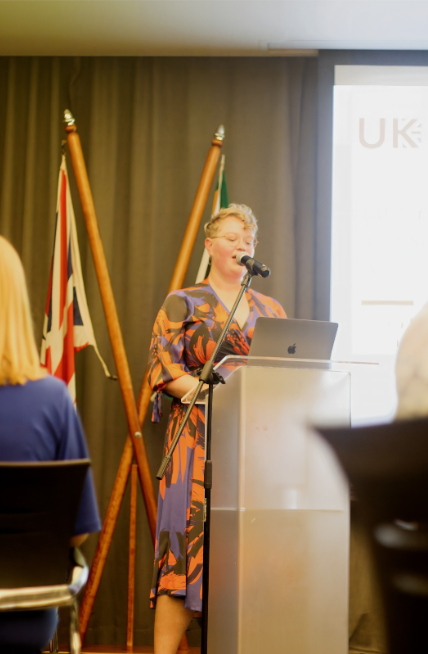 |
"Despite these challenges, I am insufferably optimistic, if not even encouraged, about the future of fair, inclusive and sustainable climate action. Of climate action that enables and contributes towards gender equality, disability and social inclusion. This optimism is bolstered by donors like UK PACT who choose to reaffirm their commitments to social and climate justice, by working with implementing partners and counterparts who meet GEDSI expectations with interest and enthusiasm, and by living in a country with a generous, progressive institutional dispensation, and a leadership that remains staunch in the face of intimidation, bullying and attempted interference." - Emma Jones-Phillipson
|
The panelists at the event were Zanie Cilliers, a Project Manager at Sustainable Energy Africa (SEA), and Dr. Priviledge Cheteni, a distinguished economist and policy strategist at South African Institute of International Affairs (SAIIA), dedicated to embedding GEDSI as foundational principles within climate and development governance.
Zanie shared SEA’s experience engaging with counterparts, including the City of Johannesburg (CoJ). SEA has leveraged existing mandates, priorities and projects, notably the CoJ’s youth policy focus and GEDSI indicators in their climate action plan, to increase attention on GEDSI whilst building strong relationships by supporting CoJ’s existing policy goals. SEA’s approach also recognises that capacity is not built overnight, so they aim to empower municipalities to be able to undertake equitable reform and fulfil their mandate.
Priviledge discussed the process of operationalising a GEDSI lens institutionally at SAIIA. SAIIA have moved beyond relying on individual champions or a single dedicated role, to instead systematically building GEDSI capacity and accountability across all research staff and project teams.
| "GEDSI becomes most effective when it moves beyond intent and is embedded into systems; how decisions are made, how resources are allocated, and how accountability is structured. When inclusion is treated as governance rather than an add-on, it strengthens both legitimacy and impact." - Dr. Priviledge Cheteni |
The question and answer session prompted a discussion of how to set an appropriate level of ambition for integrating GEDSI into UK PACT projects, particularly in highly technical work packages. This is important to avoid exacerbating the exclusion of women and people from socially excluded groups by overlooking their practical needs or replicating existing data collection or decision-making processes that exclude them. Many projects have some experience doing this - though perhaps without realising it - as they are taking steps to do no harm and implement social safeguards. The reality of socio-economic inequality in South Africa and distribution of access, resources and rights, also means that, often, projects operating in energy, climate and development sectors have some focus on reaching the most excluded. In UK PACT, projects work with GEDSI experts to define their own “Vision of Success” when developing their project GEDSI Action Plans, ensuring that their GEDSI goals are tailored to their sector, project goals, and the opportunities and barriers people from socially excluded groups face in their context.
Overall, the event emphasised the theme of recognition: the dignity of being seen and respected. It highlighted the need to recognise women and socially excluded groups, to interrogate our biases, address data and knowledge gaps, and actively support those we want to see represented in climate policies and governance.
Read more about UK PACT’s work on Gender Equality, Disability, and Social Inclusion here.
