
Climate action is most effective when the people who know the land are part of the process. This is at the heart of UK PACT’s community‑based Monitoring, Reporting and Verification (CbMRV) project in India. The project, led by Keystone Foundation, put the participation of women, Indigenous communities, marginalised groups like Dalits and others at the centre of monitoring their own environment.
As carbon markets grow and climate planning becomes more decentralised, data quality and fairness matter more. Traditional Monitoring, Reporting, and Verification (MRV) systems typically rely on satellite data, external consultants, and macro-level statistical modelling. These don’t capture the experiences of those most affected by climate change. When these voices are missing, local knowledge is ignored, benefit‑sharing becomes unequal, and policies fail on the ground. The CbMRV project aimed to move beyond checklists and ensure communities actually shape how data is collected, understood, and used.
Climate leader: Khushboo's story
Khushboo, a young woman from the Irula community in Aracode, has been an integral part of the project. The Irulas are a forest‑dependent community recognised as a particularly vulnerable tribal group. They face multiple layers of marginalisation, limited access to land rights, low literacy levels, and economic insecurity. Traditionally dependent on forests and natural resources for their livelihoods, the Irulas are especially vulnerable to environmental degradation, climate change, and displacement.
Since 2023, Khushboo has been an active member of the CbMRV project’s community stakeholders' group, helping track changes in forests, water, soil, and biodiversity. Khushboo grew up learning about forests and non‑timber forest products from her father. After she married, she worked as a tea estate labourer. When she heard about the CbMRV project and how local residents use structured tools to measure and map the health of their own ecosystem, she signed up.
In 2024, she took a break and became a mother. Returning was not easy. With limited childcare, fieldwork was challenging. However, encouragement from the rest of the group, the project team, and her husband made a difference. She was welcomed back and able to bring her child along. Her husband helped while Khusboo went out on field days too.
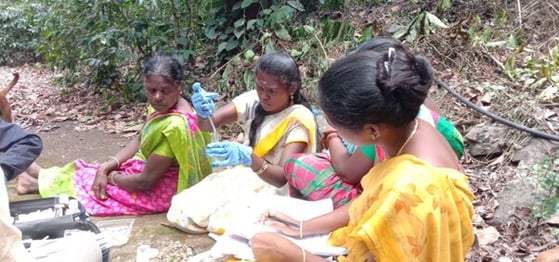
Khushboo drew on her deep connection to the land. She mapped resources, captured local ecological knowledge, and facilitated discussions within her community. Today, Khushboo is recognised as a local expert. She works with Forest Rights Committees and elders to ensure that community-generated data serves as formal evidence to secure legal land tenure and resource rights under the Forest Rights Act. By mapping these resources, she supports forest rights recognition and management decisions. Her journey shows that leadership and motherhood can go hand in hand when projects are inclusive and are designed and implemented, thoughtfully.
The project worked across three very different ecosystems: across forest landscapes in Aracode, wetlands in Vellode, and mangroves in Killai. Each area had its own social dynamics shaped by gender, caste, livelihood, and access to education.
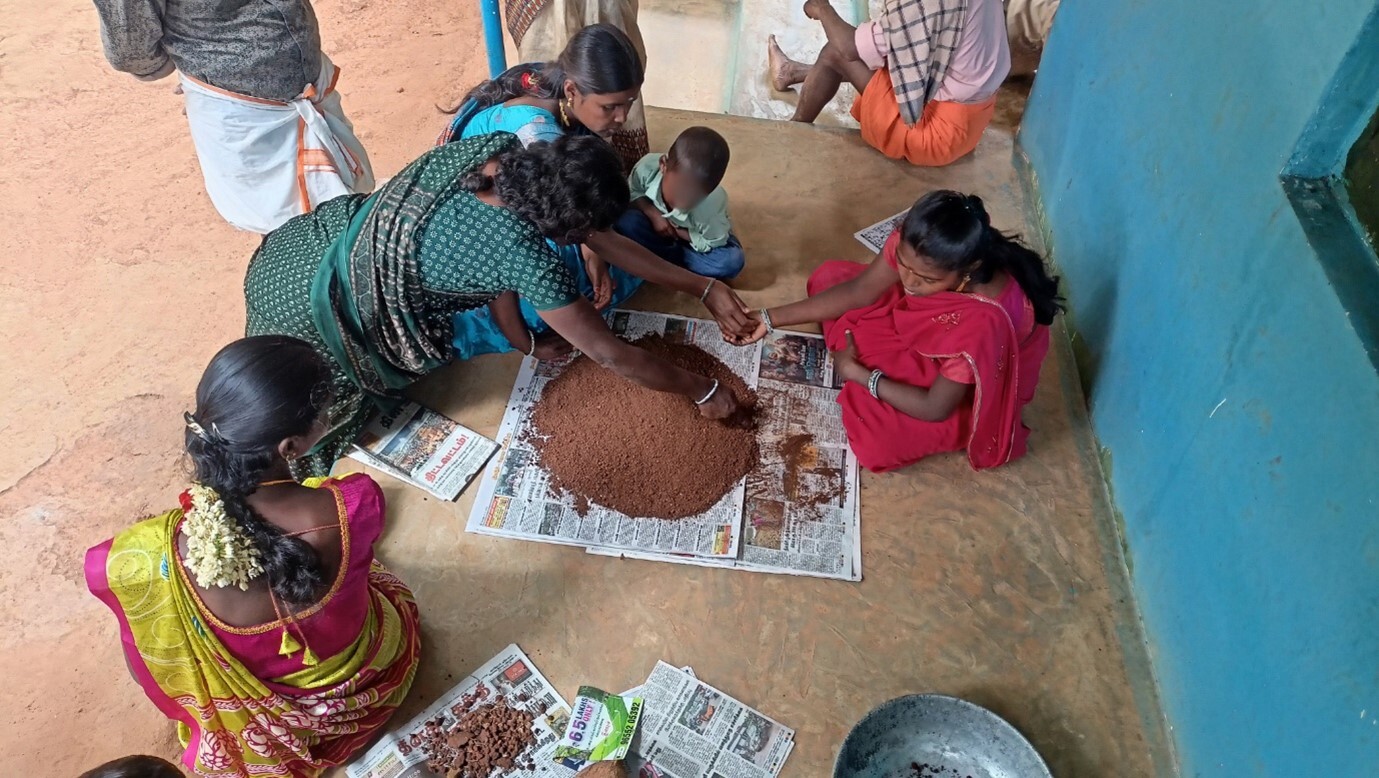
The team first focused on understanding the daily realities faced by the community. Through tools like activity mapping, seasonal calendars, and resource mapping, communities documented their lives without relying on literacy. This made space for voices often left out like widows, older people, people with disabilities, and marginalised caste groups.
Based on these insights, communities and the project team developed local action plans. This shifted dynamics by structurally embedding marginalised groups into leadership roles, scheduling project activities around daily labour and childcare realities. Audiovisual tools in local languages helped overcome literacy barriers. Separate learning spaces were created before mixed group sessions to reduce power imbalances. This ensured the MRV process reflected lived experiences, not just technical requirements.
What changed across forest, wetland and mangrove communities?
Each site revealed different challenges and opportunities:
- In Aracode, women and forest elders became central to data collection.
- In Killai, involving Irula fishing communities relocated after the 2004 tsunami, helped rebuild trust and link mangrove conservation with livelihoods.
- In Vellode, caste divisions initially limited collaboration, but shared exercises gradually built dialogue and cooperation.
Today, the project works closely with 33 community stakeholders, including Indigenous women, Dalit members, fishing communities, and other local leaders. They’ve built the confidence to engage directly with government institutions, which has helped improve the quality of data as well as strengthened a sense of ownership within the community.
The project has shown that building trust takes time. Showing up regularly, listening carefully, and being consistent matters more than rushing into data collection.
Local knowledge is invaluable; when traditional ecological knowledge and modern empirical data are treated as complementary, the outcomes are much richer and more meaningful. Finally, real inclusion comes from supporting local leadership.
Mainstreaming gender and social inclusion reminds us that inclusion is not a checklist, it is about relationships, shared responsibility, and ensuring every voice has space to shape our future.
