
South Africa is seeking to make renewable energy growth a driver of jobs, investment and local industry. UK PACT is helping South African partners turn national ambitions into business opportunities, through workforce training and locally led action.
- A national plan for economic growth in place: Linking renewable-energy expansion with South African industry and employment, with the aim of creating more than 25,000 jobs by 2030.
- Skills for a changing labour market: Helping colleges and training providers respond to the skills renewable-energy employers need.
- Cleaner power and investment: Research contributed to more than R7.256 billion, approximately £311 million, in private investment. This included investment in solar thermal manufacturing, renewable-energy installations and related training. The projects supported through this work include close to 200 MW of installed and under construction renewable-energy capacity across manufacturing, mining, mobility and distribution sites.
- New opportunities beyond coal: Addressing investment barriers to R75 billion in potential green projects in coal-reliant areas that could create thousands of jobs.
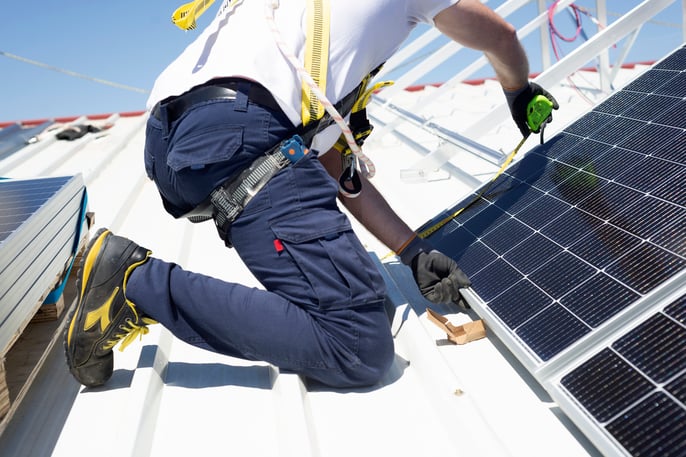
South Africa has set out an ambitious plan to make renewable energy part of its wider economic future. The South African Renewable Energy Masterplan, known as SAREM, aims to expand renewable energy while building more of the industry within South Africa, creating jobs in manufacturing, installation and related services. The plan seeks to create more than 25,000 jobs by 2030 of which half are intended for young people. This could add more than R420 billion, approximately £17 billion, to South Africa’s GDP – which represents five per cent.
This energy transition comes at a critical time for South Africa. Economic growth has averaged less than one per cent annually over the past decade. One in three working-age South Africans who are actively seeking work remain unemployed. Reliable electricity has also been a longstanding constraint on businesses and growth, following years of power shortages and scheduled outages.
At the same time, coal still generates around 80 percent of South Africa’s electricity. This heavy reliance on fossil fuels has made South Africa Africa’s largest greenhouse-gas emitter and one of the world’s top 20.
South Africa needs more electricity, more jobs and fewer emissions. This masterplan intends to tackle these challenges by bringing together government, industry, trade unions, local communities and civil society. By manufacturing more renewable-energy equipment locally, South Africa could attract investment, grow new industries and create routes into employment, including in regions that currently depend on coal.
With UK PACT support, South African partners are working across these different parts of the transition, connecting national planning with market intelligence, workforce training and locally led economic development.
A national plan for South Africa’s renewable energy and economy
Approved by Cabinet for implementation in March 2025, SAREM links the expansion of renewable energy and battery storage with local manufacturing and employment.
The plan was developed through several years of work involving government departments, businesses, trade unions, education providers and civil society. GreenCape, supported by UK PACT, helped coordinate the process, provided research and brought different groups together to agree on a shared direction.
Alongside its youth employment target, the plan includes measures to increase opportunities for women, Black-owned businesses and emerging suppliers. This includes plans for targeted business support and clearer standards for participation in the renewable-energy supply chain.
Helping businesses decide where to invest
 Since 2023, UK PACT has supported GreenCape to provide forecasts, policy updates and analysis of opportunities in renewable energy, energy services and electric vehicles.
The research contributed to more than R7.256 billion, approximately £311 million, in private investment. This included investment in solar thermal manufacturing, renewable-energy installations and related training. The projects supported through this work include close to 200 MW of installed and under construction renewable-energy capacity across manufacturing, mining, mobility and distribution sites.
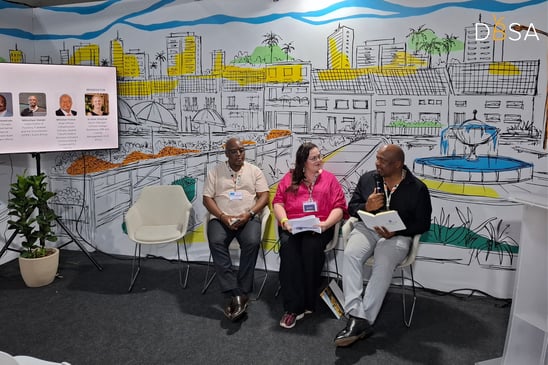
These early results show how targeted investment in research and expertise can inform much larger private-sector decisions. By helping renewable-energy projects move forward, the work can also support South Africa’s efforts to reduce its dependence on coal and lower emissions over time. Development Bank of Southern Africa (DBSA), ICLEI Africa, SALGA & UK PACT highlight South Africa’s energy transition at COP 30 (credit DBSA)
Training people for South Africa’s green jobs
As the renewable energy industry grows, employers will need people who can manufacture, install and maintain new technologies. Yet businesses have not always had an effective way to communicate those needs to training providers.
With UK PACT support, GreenCape and South African partners developed PowerUp, a platform through which employers can share their skills needs directly with colleges and training institutions. It has already contributed to changes in courses including electrical engineering and welding.
“PowerUp is a much-needed mechanism to strengthen the bridge between industry and the Post School Education and Training system,” says Mpho Mookapele, CEO of the Energy and Water Sector Education and Training Authority.
The authority now manages PowerUp, giving it a permanent place within South Africa’s national skills system.
Creating opportunities beyond coal
In Mpumalanga, eastern South Africa, lies at the heart of the country’s coal industry. Many of its workers, businesses and communities depend on coal mining and coal-fired power.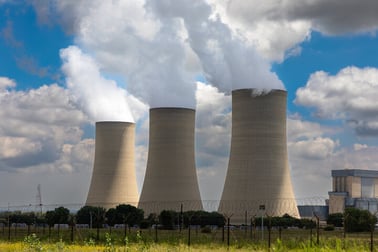
With UK PACT support, GreenCape worked with the Mpumalanga provincial government to establish and strengthen the Mpumalanga Green Cluster Agency. The organisation brings government, businesses and education providers together to identify new industries and attract investment.
It is already addressing investment barriers affecting R75 billion, approximately £3 billion, in potential green projects and if moved forward, could create more than 13,000 jobs. Though these figures represent potential rather than investment or employment already secured, local institutions now have practical ways to continue developing new opportunities in the sector that move away from coal.
Building the foundations for economic opportunity
South Africa is now moving towards implementing SAREM, including establishing an office to coordinate delivery and developing support for local manufacturers and suppliers.
Related UK PACT support to Sustainable Energy Africa is also looking at local community and municipality level, to improve energy planning, test renewable energy approaches and involve residents and businesses in decisions about access, affordability and implementation.
The projected jobs and wider economic benefits will depend on continued political commitment, private investment and cooperation between government, businesses, workers and training providers. But important foundations are now in place.
These efforts illustrate how South Africa is connecting renewable energy with economic development, workforce skills and local investment. Rather than focusing on individual projects, UK PACT's partnerships are helping build the institutions, evidence and collaboration needed to support a just transition over the long term.
About South Africa–UK PACT
UK PACT provides countries with the expertise they need to cut emissions quickly and grow their economy sustainably. Running since 2018, it works in partnership with over 20 countries with large and growing emissions or important ecosystems to tackle the most pressing climate issues they face, from power to planning and finance to forests. UK PACT deploys the best local, in-country expertise, as well as leveraging the UK’s world class public and private sector experts to deliver impactful and long-lasting change through both short- and long-term projects.
South Africa-UK PACT works with local organisations to strengthen policy, attract investment and build the skills and institutions needed for a fair and inclusive transition.
